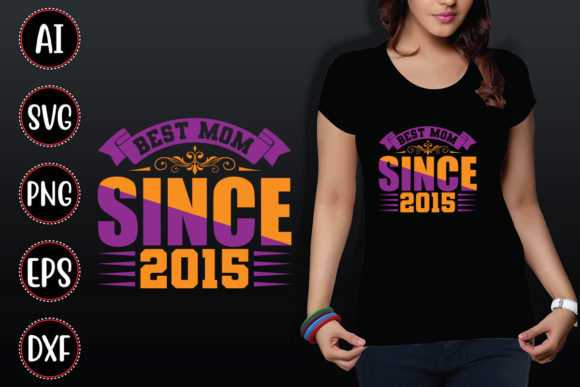
Best Mom Since 2015 Embroidery Review
As a designer who spends more time staring at stitch charts and fabric swatches than sleeping, I have learned to trust my gut before I ever load a hoop. When I first pulled up the Best Mom Since 2015 design asset, my immediate reaction was not just about the text itself, but about the emotional weight it carries. This is not merely a collection of vector paths or pixel-perfect shapes; it is a narrative waiting to be stitched into existence. For those of us in the craft business, selling handmade products, or creating personalized gifts for clients, understanding the "why" behind a design is just as important as the technical execution.
The core appeal of this design lies in its specificity. By anchoring the sentiment to the year 2015, the design transforms from a generic greeting into a deeply personal milestone. It speaks directly to mothers who are celebrating their fifth anniversary of motherhood, making it an ideal candidate for holiday embroidery projects, anniversary gifts, or boutique branding that focuses on life milestones. The visual personality feels warm, celebratory, and grounded, which is exactly what you want when you are trying to build customer trust and create a tangible connection with the buyer.
First Impressions: Mood and Visual Layout
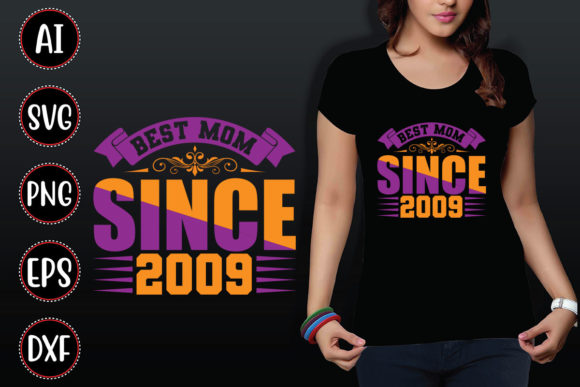
When evaluating any machine embroidery design, the first thing I look for is balance. Does the eye travel naturally across the composition? With Best Mom Since 2015, the layout appears to prioritize legibility while maintaining a decorative flair. In the world of T-Shirt Designs and Graphics, clarity is king. If a customer cannot read the message within three seconds of seeing the finished product, the design has failed its primary purpose.
The mood created here is one of pride and nostalgia. It feels like something that belongs on a soft cotton tee worn on a Sunday morning, or perhaps embroidered onto a high-quality canvas tote bag for a mom who is always on the go. The design’s structure suggests it can handle both delicate satin stitch lettering and potentially denser fill stitch backgrounds, depending on how the file is interpreted by your digitizing software. This versatility is crucial for embroidery designers who need to adapt assets for different garment types without losing the original intent.
Real-World Application: From Screen to Stitch
Let’s talk about practical use. I recently imagined using this design for a custom order for a client’s husband, who wanted to surprise his wife with a personalized gift marking five years of parenting their first child. We discussed placing this on a heavyweight sweatshirt for comfort and durability, or perhaps on a linen apron for the home chef. Both options felt right, but they required different technical considerations.
For custom apparel like sweatshirts or hoodies, the design holds up beautifully because the fabric provides a stable base. However, if you plan to use this for tote bag design projects, you must consider the weave of the canvas. A tight-weave canvas will render the details sharply, while a looser weave might cause the threads to shift, blurring the finer points of the typography. Similarly, for baby embroidery items, such as onesies or burp cloths, the softer fabric requires a lighter touch in terms of stitch density to avoid puckering.
This design also shines in the realm of personalized gifts. Because it references a specific year, it encourages customization. Sellers can offer variations where the year is editable, allowing customers to input their own dates. This flexibility increases the perceived value of the handmade product and makes it a stronger contender for Etsy listings or small shop product catalogs. The emotional resonance drives engagement, turning a simple purchase into a commemorative keepsake.
Technical Considerations and Fabric Compatibility
No design is perfect for every surface. While Best Mom Since 2015 is versatile, there are specific scenarios where caution is advised. For instance, attempting to stitch this on highly textured fabrics, such as chunky knits or bouclé wool, can obscure the detail. The thread may get lost in the fabric’s topography, resulting in a muddy appearance. In these cases, a stabilizer is non-negotiable, but even then, the result may lack the crispness expected in commercial embroidery.
Stretchy fabrics present another challenge. If you are working with jersey or spandex blends, the design must be digitized with adequate underlay stitches to prevent distortion. Without proper stabilization, the act of stitching can pull the fabric, warping the text and making the message difficult to read. This is particularly relevant for caps and hats, where the curved surface adds complexity to the stitching process. On curved surfaces, the design needs to be scaled appropriately to ensure that the letters do not stretch unnaturally.
Furthermore, dark fabrics require careful thread color selection. If the design relies on thin lines or small accents, contrasting thread colors are essential to maintain visibility. Testing the design in a black-and-white mockup can help you visualize how the contrast will hold up once stitched. Always inspect small details closely; if the original graphic includes tiny decorative elements, ensure they are large enough to be reproduced clearly in thread. Tiny details often disappear in embroidery, so simplifying the design for the medium is sometimes necessary.
Design Assets and Professional Workflow
The availability of Print Ready AI, EPS, SVG, DXF, PNG files is a significant advantage for modern creators. These formats allow for seamless integration into various workflows. You can use the vector files for logo design or sign making, while the raster files are perfect for printable mockups to showcase your work online. For digital product sellers, having multiple file types means you can offer greater value to your customers, whether they are using cutting machines or embroidery software.
Before committing to a full production run, always test the design on scrap fabric. This step allows you to check thread colors, review stitch density, and confirm the hoop size requirements. It is also wise to compare light and dark fabric backgrounds to see how the design adapts. If you are planning to sell finished items, confirm the licensing terms associated with the design assets. Ensuring you have the right to use the design commercially protects your craft business and maintains professionalism in your brand identity.
Final Verdict
Best Mom Since 2015 is more than just a template; it is a tool for storytelling. Its strength lies in its ability to evoke emotion through specificity, making it a powerful addition to any embroidery project focused on family and milestones. Whether you are creating holiday embroidery collections, expanding your apparel decorator services, or simply making a heartfelt gift, this design offers a solid foundation for a beautiful finished product. By paying attention to fabric choice, stabilization, and technical details, you can transform this digital asset into a cherished physical memory.